
No Water at Your Wimberley Home? A Well Pump Emergency Guide
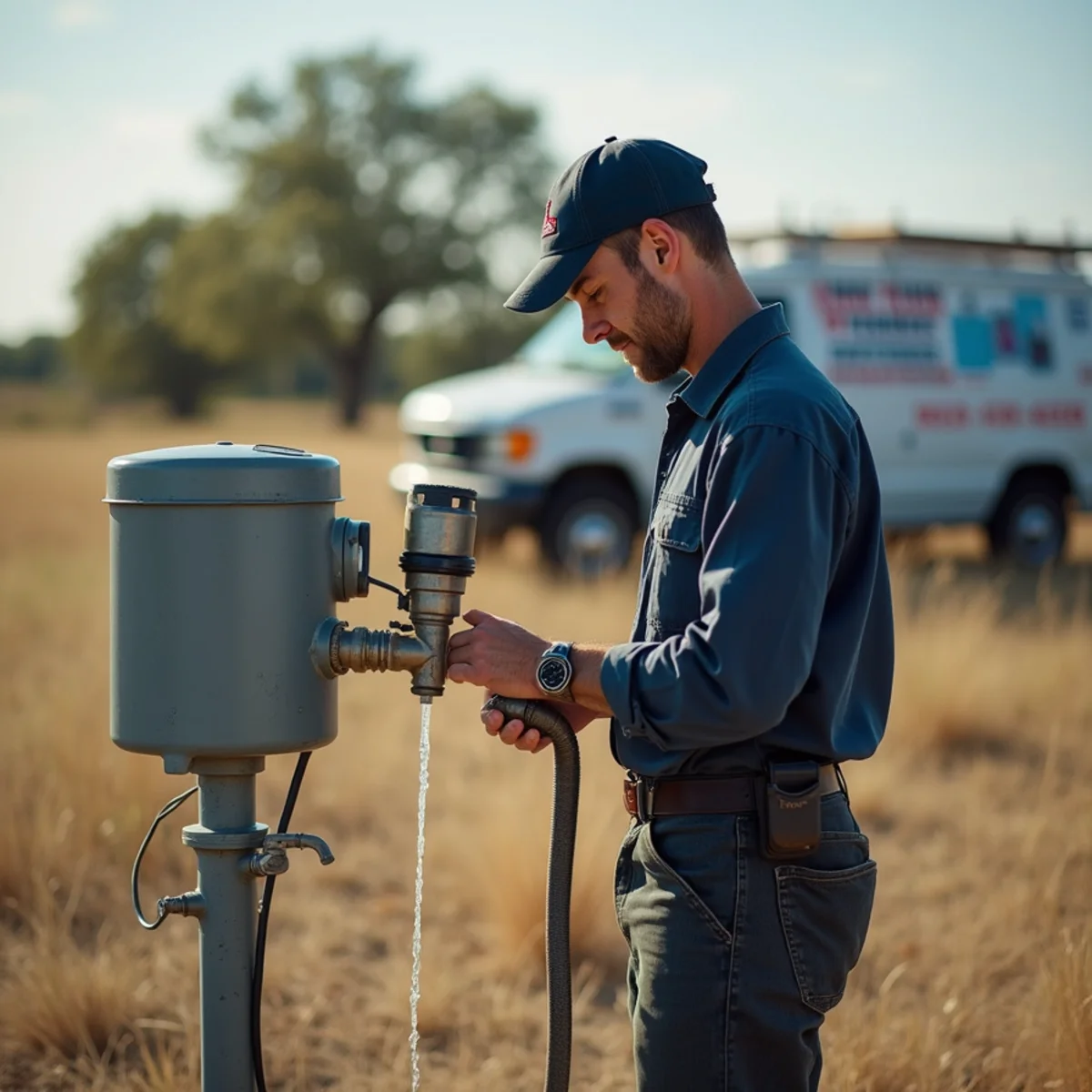
Losing all water on a private well feels different from a city outage. There is no utility to call, no neighborhood-wide problem to wait out. It is your system, and something in it has stopped. The good news is that most sudden no-water calls we run around Wimberley come down to a short list of causes, and a couple of them you can check safely yourself.
Before you do anything, resist the urge to keep flipping switches or cycling the pump. A pump that is dry-running or short-cycling can burn up fast, and turning it on and off repeatedly is one of the surest ways to turn a cheap fix into a pump replacement.
Start With the Obvious: Power
A surprising number of no-water calls are a tripped breaker. Hill Country storms and our aging rural power lines cause surges that trip the pump circuit. Go to your panel and look for a breaker that is off or sitting halfway. Reset it once. If it trips again immediately, stop. That is the pump or wiring telling you there is a fault, and forcing it will only cause more damage.
Check the Pressure Tank and Switch
Your pressure tank and pressure switch are the brain of the system. The switch senses when pressure drops and tells the pump to run. When switches wear out, corrode, or get fouled by our iron-heavy Trinity Aquifer water, they stop making that call and the pump never kicks on.
Tap the gauge on the tank. If it reads zero and the pump is not running, you may have a bad switch, a tripped pump, or a system that has lost prime. If the gauge reads normal but you still have no water in the house, the problem may be downstream, like a closed valve or a clog rather than the pump itself.
Listen for the Pump
Stand near the well house or the pressure tank and open a faucet. Do you hear the pump try to run, hum, or click? A pump that hums but will not start often has a failed capacitor or start relay in the control box. A pump that clicks and does nothing may be seized. A pump you cannot hear at all points back to power or the switch. Note what you hear, because that detail helps our well pump service tech arrive with the right parts.
Common Culprits, Ranked
- Tripped breaker or power interruption after a storm
- Failed pressure switch or a waterlogged pressure tank
- Bad capacitor or start relay in the control box
- Dropped water table or a pump set too shallow in a dry spell
- Failed pump motor or a leak in the drop pipe down the well
The Drought Factor
We get dry stretches in the Hill Country, and the Trinity wells around here can draw down in a bad summer. If your water sputters, spits air, then quits, and it comes back after resting a few hours, your pump may be reaching the top of a falling water column. That is not always a pump failure, but it usually means the pump needs to be lowered or the well evaluated. We see this pattern from Wimberley out to the higher ground around Dripping Springs.
What Not to Do
- Do not keep cycling the pump hoping it catches, dry-running kills motors
- Do not pour water down the well to prime it unless a pro tells you to
- Do not pull the well cap and drop tools or a light in, you risk contaminating the water
When to Call
If power is on, the breaker holds, and you still have no water, it is time for a pro. Well work involves confined electrical connections, heavy pumps set hundreds of feet down, and pressurized tanks that can hurt you if mishandled. Our techs pull and reset pumps, replace switches and tanks, and diagnose whether you are looking at a simple part or a full pump job. For homeowners who want to avoid these calls, our well maintenance guide covers the annual checks that catch problems early.
A pressure switch is a twenty-dollar part. Ignoring the warning signs until it strands the pump is a several-thousand-dollar lesson.— Blanco River Plumbing Co.
What to Have Ready When You Call
Well work goes faster when we arrive with the right parts, and you can help by gathering a few details before we get there. Knowing your well depth, the pump horsepower, and the age of the system tells us a lot before we ever pull the cap. If you have the original well log or the paperwork from the last pump service, dig it out. Note whether this is the first time you have lost water or whether the pressure has been fading for weeks, because a slow decline points to different causes than a sudden stop.
Also tell us what changed recently. A new appliance drawing more water, a fresh irrigation zone, a storm the night before, or a long dry spell all shape the diagnosis. And be honest about any patches or shortcuts a previous owner may have made, because homemade wiring and mismatched parts are common on older Hill Country wells and they change how we approach the repair. The more you can tell us up front, the better the odds we solve it in a single trip.
Frequently asked questions
The pump may have lost prime, the water table may have dropped below the pump, or there may be a leak or break in the drop pipe. Each needs a different fix, so have it inspected.
You can safely reset a tripped breaker once. If it trips again, leave it off, because a repeatedly faulting circuit usually signals a failing pump or pressure switch that needs professional attention.
Submersible pumps rely on water for cooling and can be damaged in minutes of dry running. That is why we tell homeowners never to keep cycling a pump that will not deliver water.
Tap the tank and listen. A tank that feels waterlogged and heavy, with the pump rapidly clicking on and off, points to a failed tank bladder rather than the pump. If the pump will not run at all and the gauge sits at zero, suspect power, the pressure switch, or the pump itself. Note what you hear when you call (831) 290-4327 and we will arrive with the right parts.
Sputtering, air, and cloudy water often mean the pump drew the well down during a dry Hill Country spell and pulled in air, or that a recent repair let air into the lines. It usually clears after the well recovers and you run the taps a while. If it keeps happening, the pump may be set too shallow for a falling Trinity water table and needs evaluating.