
Tank vs. Tankless Water Heaters for Well-Water Homes
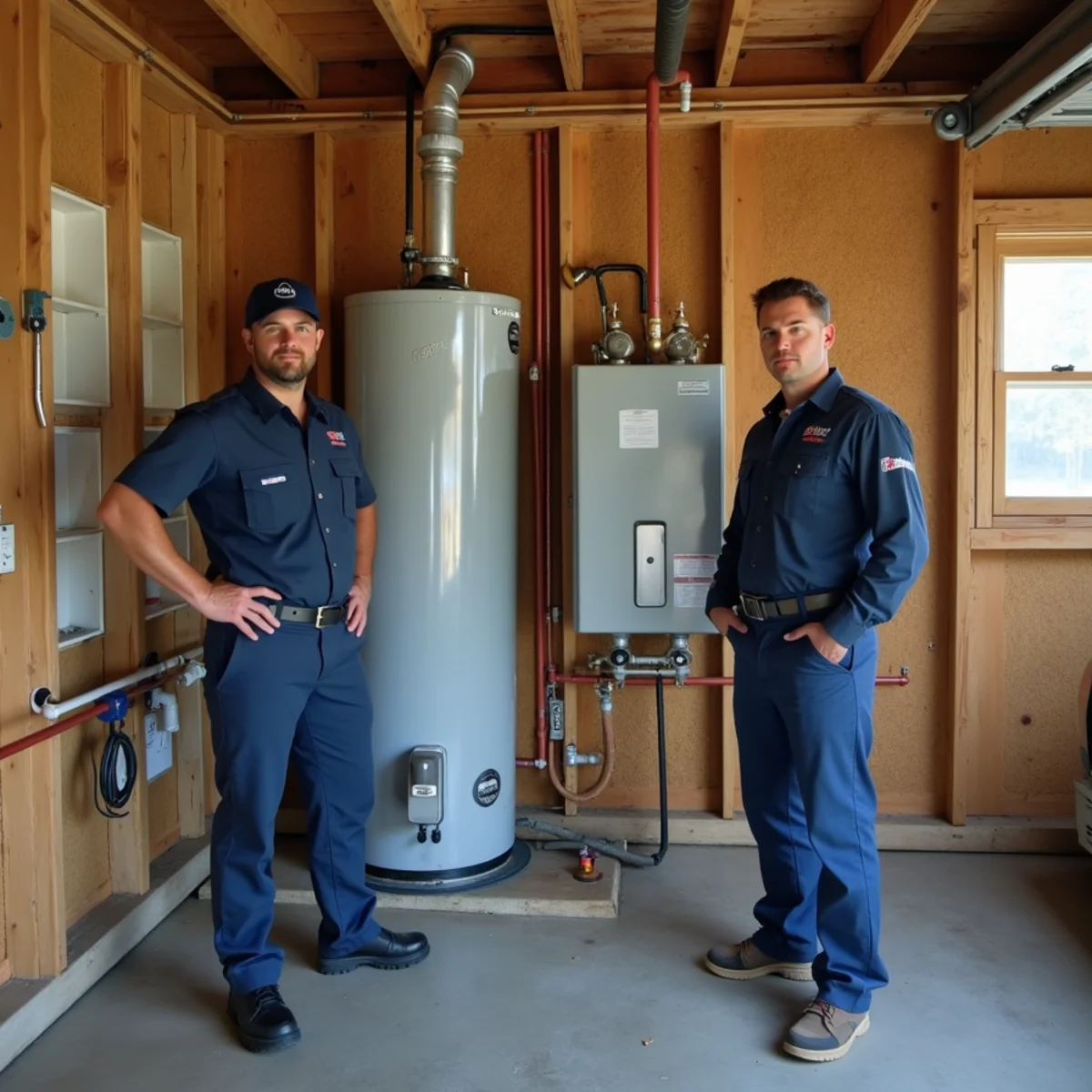
Tankless water heaters have a strong reputation, endless hot water, lower energy bills, a smaller footprint, and salespeople love to lead with those points. They are real advantages. But if you are on a private well in the Hill Country, there is a wrinkle nobody at the big box store mentions: our hard water is tough on tankless units, and choosing wrong can mean scale-clogged heat exchangers and disappointing performance.
I install both, and I have no dog in the fight beyond wanting you happy years from now. So here is the honest comparison for well-water homes.
How Each One Works
| Factor | Tank | Tankless |
|---|---|---|
| Upfront installed cost | Lower ($1,100–$2,350) | Higher ($2,500–$5,000+) |
| Hot water supply | Limited by tank size | Endless, but flow-rate limited |
| Hard-water tolerance | Sediment settles in the tank | Scale clogs the heat exchanger — needs softening |
| Typical lifespan | ~8–12 years | ~15–20 years with maintenance |
| Footprint | Large floor unit | Wall-mounted, compact |
A tank heater keeps 40 to 80 gallons hot and ready, reheating as you draw it down. A tankless unit heats water on demand as it flows through a heat exchanger, so it never runs out but delivers a limited flow rate at any moment. That fundamental difference drives every trade-off below.
The Hard-Water Catch
Here is the part that matters for well homes. A tankless unit forces water through a narrow heat exchanger at high temperature, which is exactly the condition that makes dissolved minerals precipitate into scale. On our Trinity Aquifer water, an unprotected tankless heater can scale up fast, losing efficiency and eventually clogging. Manufacturers know this, and many warranties require annual descaling and often a water softener on hard water. Skip that and you can kill an expensive unit in a few years.
Where Tankless Wins
- Endless hot water, great for back-to-back showers or a busy rental
- Compact size that frees up closet or garage space
- Lower standby energy loss, since there is no tank to keep hot
- Longer lifespan when properly maintained and protected from scale
Where Tank Wins
- Lower up-front cost to buy and install
- More forgiving of hard water, with simpler annual flushing
- Higher instantaneous flow, better for running several fixtures at once
- Simpler, cheaper repairs when a part eventually fails
Flow Rate and Cold-Weather Reality
One thing well owners overlook: tankless units are rated by how much they can raise the incoming water temperature at a given flow. Our well water comes in cold in January, and a unit that delivers plenty in summer can struggle to keep up when the incoming water is 50 degrees and two showers are running. Proper sizing for winter conditions is essential, and it is where a lot of undersized installs disappoint their owners.
My Honest Recommendation
For a well-water home, I steer most families one of two ways. If you want tankless, commit to doing it right: proper sizing for winter, a water softener or filtration, and annual descaling. Done that way, it is a great system. If you would rather keep it simple and cheaper up front, a quality tank heater paired with water treatment and yearly flushing serves you well for a decade or more. Either way, protecting the heater from our minerals is the key move. Our water heater replacement cost guide covers the pricing side.
Tankless is not better or worse than a tank on a well. It is a different deal, more performance for more maintenance. Pick the one that matches how you actually live.— Blanco River Plumbing Co.
Let Us Look at Your Setup
The right answer depends on your household size, your water, your winter incoming temperature, and your budget. We install and service both across Driftwood and the wider Hill Country, and our water heater repair team will give you a straight recommendation for your home, not a sales pitch for whatever has the highest margin.
A Middle Path: Hybrid and Point-of-Use
The choice is not always strictly one or the other. Heat pump hybrid water heaters have gained ground because they are far more efficient than a standard electric tank, and they still hold a reservoir of hot water that handles our cold winter incoming temperatures better than a marginal tankless unit. They cost more up front and need some air space around them to work, but for the right home they split the difference nicely. In our climate they perform well most of the year.
Point-of-use units are another tool worth knowing about. A small tankless unit under a far bathroom sink or at a guest cabin can deliver instant hot water where a long pipe run would otherwise waste water and time. For a sprawling property or a rental with an outbuilding, that targeted approach sometimes beats trying to serve everything from one central heater. The right answer depends on your layout, and that is exactly the kind of thing worth talking through before you buy anything.
Frequently asked questions
It can be, but hard well water causes scale in the heat exchanger. A tankless unit on a well needs proper filtration or softening and annual descaling to reach its full lifespan.
Tankless units heat water on demand, and colder incoming well water in winter means the unit must work harder to raise the temperature. An undersized unit can fall short during cold months.
A well-maintained tankless unit generally outlasts a tank heater, often 15 to 20 years versus 8 to 12. But on hard well water, that longevity depends entirely on descaling and water treatment.
On hard Trinity Aquifer water, plan on descaling a tankless unit at least once a year, and many manufacturers require it to keep the warranty valid. Homes with a water softener ahead of the unit can sometimes stretch that interval, but you cannot skip it. Neglect the descaling and scale narrows the heat exchanger, kills efficiency, and can ruin an expensive unit in a few years.
For many well homes, yes. A hybrid heat pump heater is far more efficient than a standard electric tank and still holds a reservoir of hot water, which handles our cold winter incoming temperatures better than a marginal tankless unit. It costs more up front and needs some air space around it to work. For the right home it splits the difference nicely between tank and tankless.