
Smell Gas or Propane? A Hill Country Plumber's Safety Steps
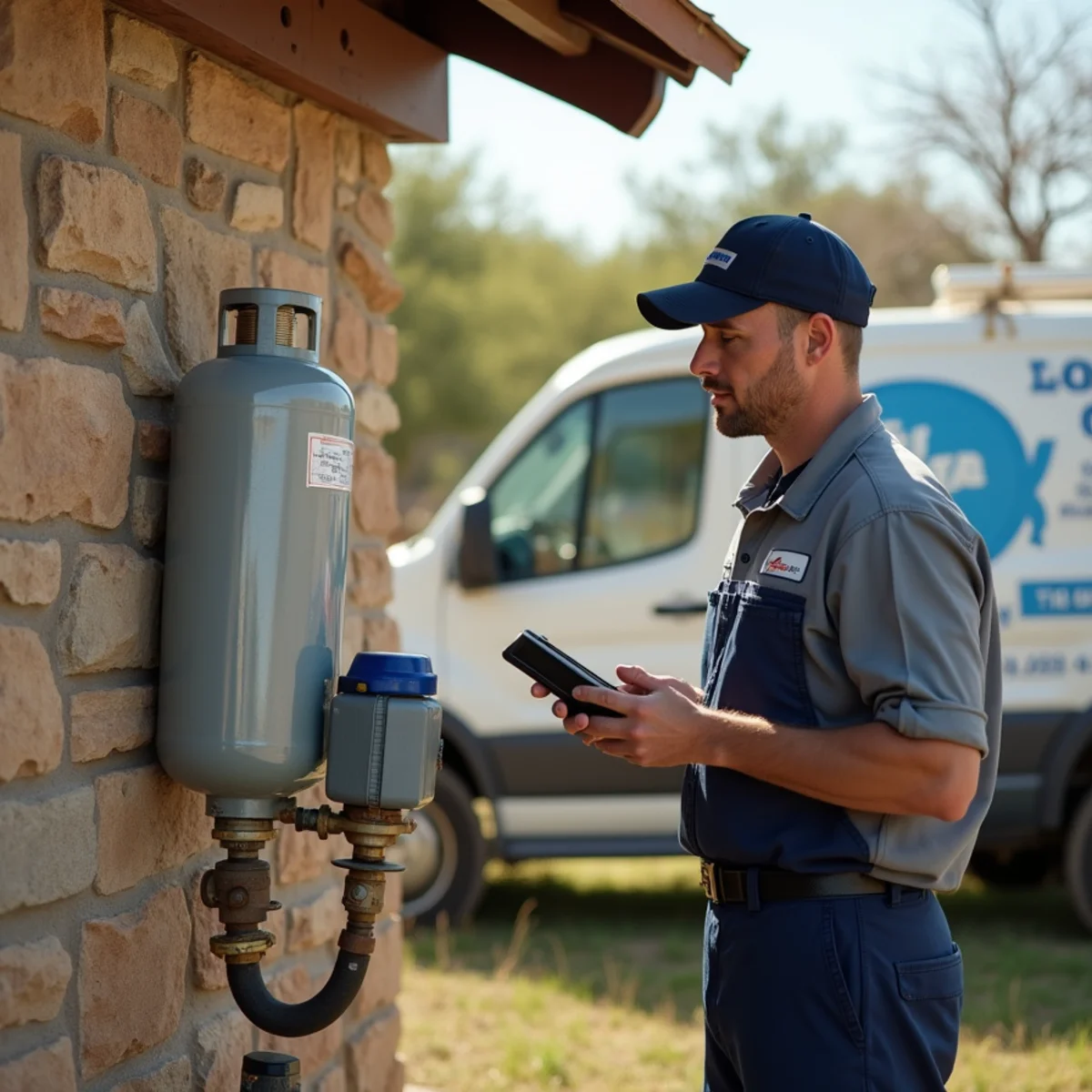
Most plumbing emergencies give you time to think. A gas leak does not. Natural gas and propane are both explosive in the right concentration, and the difference between a scare and a disaster can come down to whether someone flipped a light switch on the way out the door. This is the one guide where I want you to read the steps before you ever need them.
Gas companies add a chemical called mercaptan to give gas its rotten-egg smell, because gas itself is odorless. That smell is a warning system. Respect it every single time, even when you think it is probably nothing.
If You Smell Gas, Do This Now
- Get everyone out of the house immediately, including pets
- Do not touch any light switch, appliance, thermostat, or garage door opener
- Do not use your phone inside, a spark from any electronics can ignite gas
- Leave doors open as you go to let gas escape
- From a safe distance outside, call 911 and your gas or propane provider
Shut Off the Supply Only If It Is Safe
If you can do it safely on your way out, and only then, you can shut off the gas at the source. For propane, that is the valve on top of the tank, turned clockwise. For natural gas, it is the meter valve, which usually needs a wrench to turn a quarter turn. Never go looking for the shutoff if the smell is strong or you feel lightheaded. Your safety comes first, and the gas company can shut it at the street.
Propane Is Different, and Common Out Here
A lot of homes across rural Hays County run on propane rather than natural gas, because the gas mains do not reach out to the ranches and hill parcels. Propane is heavier than air, which means it sinks and pools in low spots, basements, and crawl spaces rather than rising and dissipating. That makes a propane leak especially dangerous in a cabin with a low crawl space, and it means the smell may be strongest down low.
Common Sources of Gas Leaks
Leaks come from a handful of usual places. Corroded or damaged supply lines, loose fittings behind a stove or water heater, a failing gas valve, or a pilot that has gone out and is releasing raw gas. The 2021 freeze damaged a lot of gas appliance connections around here as things shifted and cracked. If you have added or moved an appliance, the connection is a common leak point.
- Aging or corroded gas lines, especially where they enter the ground
- Loose connections at the stove, water heater, or furnace
- A water heater or furnace pilot that blew out
- Damage from settling, freezing, or rodents chewing lines
After the Emergency: Get It Fixed Right
Once the gas company confirms the area is safe, do not turn the gas back on and hope. A leak needs to be found precisely and repaired to code. Our gas leak repair team uses electronic detectors and pressure testing to locate the exact source, repair or replace the line, and verify the whole system holds before anything is relit. Gas work must be done to code in Texas for good reason, and it is not the place to save money with a handyman.
You can rebuild a water-damaged floor. You cannot undo a gas explosion. When in doubt, get out and call.— Blanco River Plumbing Co.
A Word on Detectors
Your nose is not always reliable. Some people have a reduced sense of smell, and a heavy leak can actually deaden your ability to detect it. Propane and natural gas detectors are inexpensive insurance, especially in cabins and rentals where guests may not know the layout. Combined with the freeze protection checks we recommend, they close a real safety gap.
Small Leaks Are Still Real Leaks
Not every leak announces itself with a strong smell. A slow seep at a fitting behind the stove or water heater may only give a faint odor now and then, and it is easy to talk yourself out of it. Do not. A small leak in an enclosed space can build to a dangerous concentration over hours, especially in a closed-up house in winter or a tight utility closet. If you catch even an occasional whiff of gas near an appliance, treat it as a problem to solve, not a quirk to live with, and have it tested.
Other clues point to a leak even when your nose does not. Dead or yellowing plants right over a buried line, a hissing sound near a connection, a gas bill creeping up without more use, or a pilot that keeps blowing out can all signal escaping gas. Around here, propane lines that run underground to a tank are a common spot for slow leaks where the line meets the ground or a fitting has corroded. When in doubt, we would far rather come test and find nothing than get the call after something has gone wrong.
Frequently asked questions
Both natural gas and propane have an added rotten-egg or sulfur smell from a chemical called mercaptan. The gases themselves are odorless, so that smell is your primary warning.
Open doors as you leave to let gas escape, but do not linger to open every window. Getting everyone out quickly and calling from outside is far more important than ventilating.
Propane is heavier than air, so it sinks and collects in low areas like crawl spaces and basements rather than rising and dissipating, which is common in rural Hays County homes.
Once the area is confirmed safe, you can brush a soapy water solution on an exposed fitting or connection and watch for bubbles, which show escaping gas. Never use a flame or lighter to hunt for a leak. Soapy water only checks accessible joints, not buried lines or the inside of walls, so a faint recurring smell still needs a pro with an electronic detector and a pressure test.
Usually, yes. Most gas line repairs and new runs require a permit and a pressure test to pass inspection. This is not a place to save money with a handyman, because an undersized or leaking line is a life-safety hazard. We locate the leak, repair to code, and verify the whole system holds before anything is relit. Call (831) 290-4327 if you smell gas.