
Sewer Backup After a Hill Country Storm: What to Do
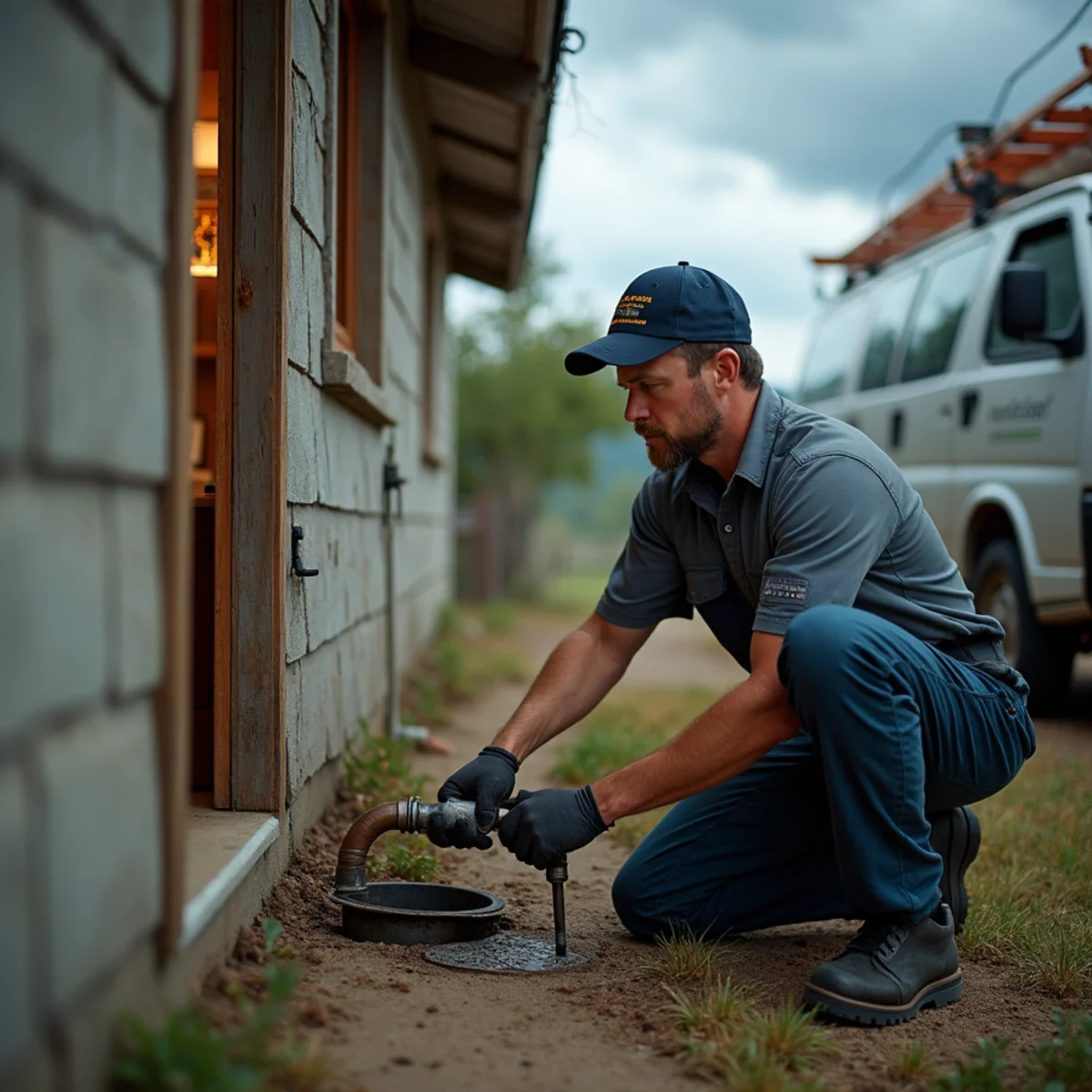
When a Hill Country storm dumps five inches of rain on limestone that cannot absorb it fast enough, all that water has to go somewhere. Sometimes it goes into your sewer line or your septic drainfield, and when those systems are already saturated, the water comes back the way it came. A sewer backup is not just a mess, it is a biohazard, and how you handle the first hour matters.
We run these calls hard after every big storm from San Marcos up through Wimberley. Here is what to do and, just as important, what to avoid.
Recognize the Signs Early
A backup rarely announces itself all at once. It starts with gurgling in the lowest drains, a tub that drains slow, a toilet that bubbles when the washer empties. Those are the warning signs that your main line or septic system is losing capacity. If you notice them during heavy rain, stop using water immediately. Every flush and every load of laundry adds to what has nowhere to go.
Protect Yourself First
Sewage carries bacteria, viruses, and parasites. Treat any backup water as contaminated. Keep kids and pets away, wear rubber boots and gloves, and do not touch electrical switches or outlets if water has reached them. If a large area is affected, ventilate the space and get out until it can be handled safely by our sewer backup cleanup crew, who arrive with the right protective gear and sanitizing equipment.
City Sewer vs. Septic
Your next step depends on your system. On city sewer in San Marcos, Kyle, or Buda, a backup during a storm can mean the municipal line is surcharged, or it can mean a blockage in your own lateral. On a septic system, common all around rural Wimberley and Woodcreek, heavy rain can flood the drainfield so the tank has nowhere to discharge. Aerobic systems with spray fields have their own quirks in a downpour.
- On city sewer, check whether neighbors are affected, which points to a main-line problem
- On septic, avoid running water until the ground drains and the field recovers
- Either way, do not use chemical drain cleaners, they will not clear a saturated main and they endanger our crew
Limit the Damage Indoors
If water has already come up through a floor drain or a toilet, contain it. Towels and sandbags at doorways keep it from spreading to carpeted rooms. Move belongings up and out. Photograph everything for insurance before you clean. Then leave the actual sanitizing to professionals, because sewage soaks into porous materials and surface mopping does not make a space safe again.
Why It Happened, and How to Prevent the Next One
Storm backups usually have a root cause that the storm just exposed. Tree roots in the line, a partial clog, a bellied pipe holding water, or a drainfield past its life all reduce the margin your system has. Once we clear the immediate backup, we camera the line to find out why it failed. If roots or a broken section are the culprit, our sewer line repair team can fix it before the next storm. Regular drain cleaning also keeps that margin healthy.
A storm does not create sewer problems out of nothing. It finds the weak spot that was already there and pushes on it.— Blanco River Plumbing Co.
When to Call Right Away
Call immediately if sewage is actively coming into living space, if multiple drains are backing up at once, or if you cannot stop the water. Those signal a main-line or septic failure that will not resolve on its own. Our team responds day and night, and we know the difference between a city surcharge in the valley and a flooded septic field up in the hills.
The Cleanup Is Not a Mop-and-Bucket Job
Once the line is clear, the space still has to be made safe, and this is where people underestimate the job. Sewage soaks into drywall, subfloor, carpet pad, and cabinet bases, and surface mopping leaves the contamination behind to grow bacteria and mold in our humid air. Porous materials that got saturated usually have to come out, not just dry out. The area needs sanitizing, drying with real air movers, and moisture readings to confirm it is actually dry inside the walls and not just to the touch.
That is why a proper cleanup pairs the plumbing fix with professional water restoration. Doing half the job, clearing the line but skipping the sanitizing, is how a one-time backup becomes a lingering odor and a mold problem months later. Our crews handle both sides, so you are not juggling a plumber and a separate restoration company while standing in a contaminated room. We also document everything for your insurance while we work.
Frequently asked questions
Yes. Sewage contains bacteria, viruses, and parasites. Avoid contact, keep children and pets away, and let professionals with proper protective equipment handle the cleanup and sanitizing.
Gurgling during heavy rain usually means your sewer line or septic system is losing capacity. It is an early warning to stop using water before a full backup occurs.
Standard policies often exclude sewer backup unless you carry a specific backup endorsement. Check your policy, and document all damage with photos before cleanup begins.
Wear rubber boots, gloves, and eye protection, keep kids and pets out, and ventilate the space. Remove and discard porous items that soaked, like carpet pad and cardboard, and bag them. Surface mopping does not make sewage-soaked drywall or subfloor safe, so anything saturated usually has to come out. For anything beyond a minor spot, let our crew handle the sanitizing with proper gear.
A backwater valve on your sewer line lets waste flow out but closes against water trying to push back in during a surcharge or flood, so it is one of the best protections for a home that has backed up before. It needs correct installation and occasional checking to keep working. On a flood-prone lot near the river it is worth every dollar. Call (831) 290-4327 to talk it through.